All Children are Welcome Here
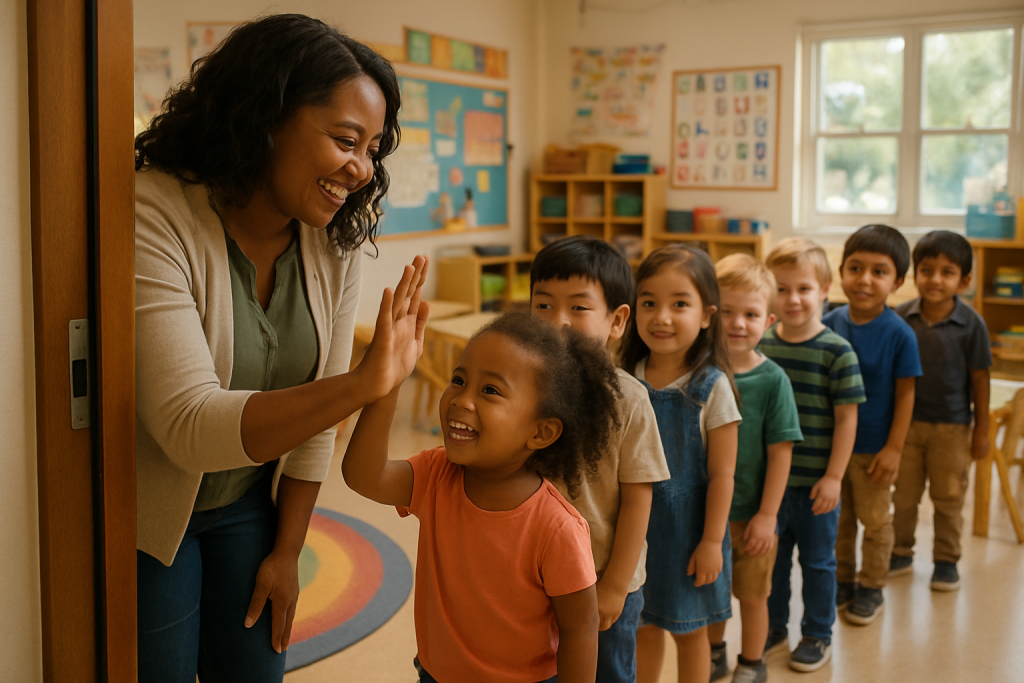
“Oh my!” Mary, the new Early Education Teacher at George Washington Carver School thought as she looked at the new class of children she would be teaching that year. There were children of all colors it seemed, some with bright eyes, others looking straight ahead with somewhat frightened smiles on their faces, others ready to use those intriguing materials that Mary had carefully placed on the shelves. And from listening to the children talk together it was clear some children did not speak English.
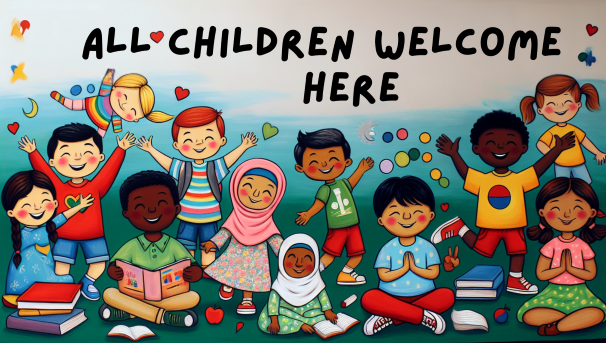
Even though this was the first year that Mary would be teaching, she recognized the opportunities that were in that group of children.
There would be chances to learn some words from a different language, enticing ideas of new foods that she could taste, and new cultures that she could be acquainted with whether the children came from other parts of her own country or whether they came from another part of the world.
She knew that this would be a year when not only could she teach children, but she would be able to learn some new things herself.
Mary is doing research and reading about refugee and immigrant children especially. She was learning about the strengths they bring to schools and communities that are similar to where Mary lived. Many of the attributes the refugee and immigrant children (and their families) bring are values that others who move into new communities far away also bring with them.
It was possibly going to be quite a challenge for her to weave the strengths that this diverse group of children bring to the classroom into the curriculum that she was charged with teaching. She believed she was up to the challenge and eager to apply the strengths she had discovered from her reading.
Strong Strengths and Cultural Elements to be Included:
- Refugees, immigrants, and others place great value on work, and education. This is evident in the workplace for adults who are often very hard-working and at school where children often also work very hard and are an inspiration to others.
- A feeling of cultural pride and pleasure in supporting their families is clear throughout the lives of many newcomers.
- Learning a new language is a challenge and immigrants often express pride in their bilingual abilities and being able to translate for their parents – as difficult as that might turn out to be. Working hard they are often very proud for being able to do well in school.
- Family connections are very important and remain strong even as children and their families learn to live in their new complicated environment.
- Problem Solving As Dr. Dan Diamond, MD has recently said, “Some of the best problem solvers are by-cultural people. They can look at an issue from more than one lens and get a depth perception that others might miss. With these and other capabilities some immigrants have become some of the most brilliant contributors to US society and the world in general. We are a more competent and economically stable country with their contributions.
Yes, Mary realized that as a teacher or other caregiver of young children, we must be devising programs that will welcome all children into school or other programs no matter what the differences are between them. She must take into consideration those strong elements that she had read about and design a program where all children are able to learn. We know that children learn best when they feel safe and comfortable at school.
“All children must be welcome in my classroom.”, Mary promised herself (and anyone else who might be listening)!
Deciding What is Important
The following are things that Mary decided it would be important to include in her work as the teacher of this classroom full of children waiting and eager to learn.
“Oh”. she said to herself, “I must
- Prepare to welcome the children.
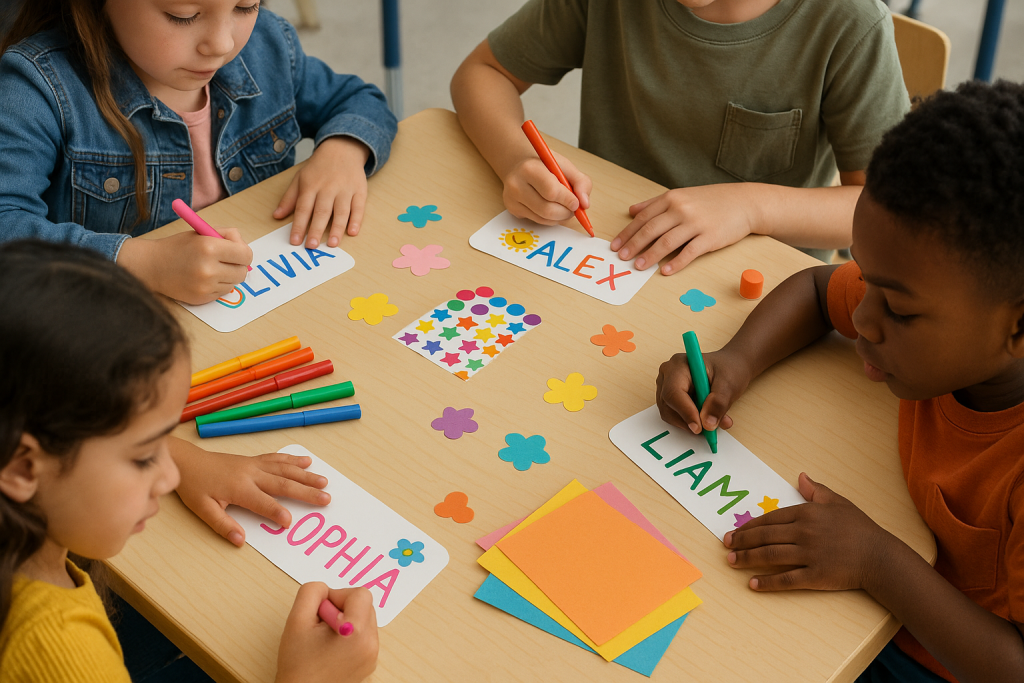
One thing she could do was to discuss with the class about new students who may be newcomers and might not be able to speak or understand English very well. What could all the class members do to help others feel welcome? Mary needs to remember that helping the children think through problems such as this one will give them practice In considering issues with others as they decide on the best ideas. - Provide art materials for children to make their own name tags.
Around a background of pretty flowers or other bright colors children could write their names of what they would like to be called so others could call each other by name. The adults may need to help the children with this activity but not only is it fun for children to create their own name tags, they feel good about learning how to write their name and wearing. it. And don’t forget, children learn by doing so writing their name on their name tag gives them good practice and learning on how the letters are formed and put together in just the right order to describe the child’s name. And when the kids read another child’s name they are using pre-reading skills and the child wearing the name tag feels proud of who they are. . When children feel powerful (good about themselves) they are ready to learn. They often feel like they can do anything. - Children who have experienced trauma and exposure to unsafe environments communicate better through visuals than words.
So devise play and non-play experiences that do not require English where children can be successful. Devise activities where children can be successful. Yes, they need to learn but they learn best with success. - Find ways that new children could share their backgrounds.
They could do that through expressive arts – paint/drawing, music, dance, story telling, sharing some words of their language. songs and games they may have played in their “home of origin”. - Help families understand the school and it’s systems.
Schools they may been part of before could have been very different then the one their child is attending now. The classroom may be set up differently, the daily schedule may work differently, and some things they could do at home that would support their children’s learning could give them new ideas. - Help families connect with community resources that might help them adjust to their new environment. New community resources may be available – especially social organizations and faith communities. Getting acquainted with community organizations can give new families a support as they struggle with the many new the experiences they will encounter.
And there are other things that Mary will learn to do that will help children of all ethnicities, backgrounds, languages, and skill level to learn and increase the feeling of belonging in her classroom.
In devising curriculum especially for working with refugees, immigrants, and other newcomers who have experienced trauma, (which a lot of young children have survived,) Haley Lansing In her document, “Storytelling and Narrative Therapy through Art among Refugee Children” has stated that “,,,,,Children who experience trauma and exposure to an unsafe environment communicate better through visuals than words,” ….”Refugees are more comfortable with silence than with verbal communication” and “…..art can promote a sense of home and comfort through similarities, relationships, culture, and community.”
In the article “Saving Maori culture and improving student access, success,” Nathan M. Greenfield, the author, describes the educational successes of students whose education takes place in gatherings in buildings where Maori cultural arts and crafts are an integral part of the learning environment on walls , the ceiling, in pictures which all tell the student, “You belong here. You are welcome here.” Learning, he says, is the combination of being together, talking together, sharing thoughts and ideas as well as being in an environment In which they feel welcome with examples of their heritage surrounding them.
Many of the programs for children that we work with are a mixture of many cultures, many unique heritages, coming from many places in the world. Mary was aware of the importance of helping her students share their backgrounds. Her challenge is to bring forward as many of those cultural aspects her children bring with them with the rest of the class, with the rest of the school.
Mary is ready and she can’t wait to get started.
This article was inspired by Sara Inama and her desire to “fight back” as she made a welcoming place for all children in her classroom YouTube Video and the article in the NAEYC (National Association for the Education of Young Children) publication, “Welcoming Refugee Children into Early Childhood Classrooms.“
[Images used in the articles are representations created using AI graphics.]